Last updated: November 2026. For information only, not medical advice.
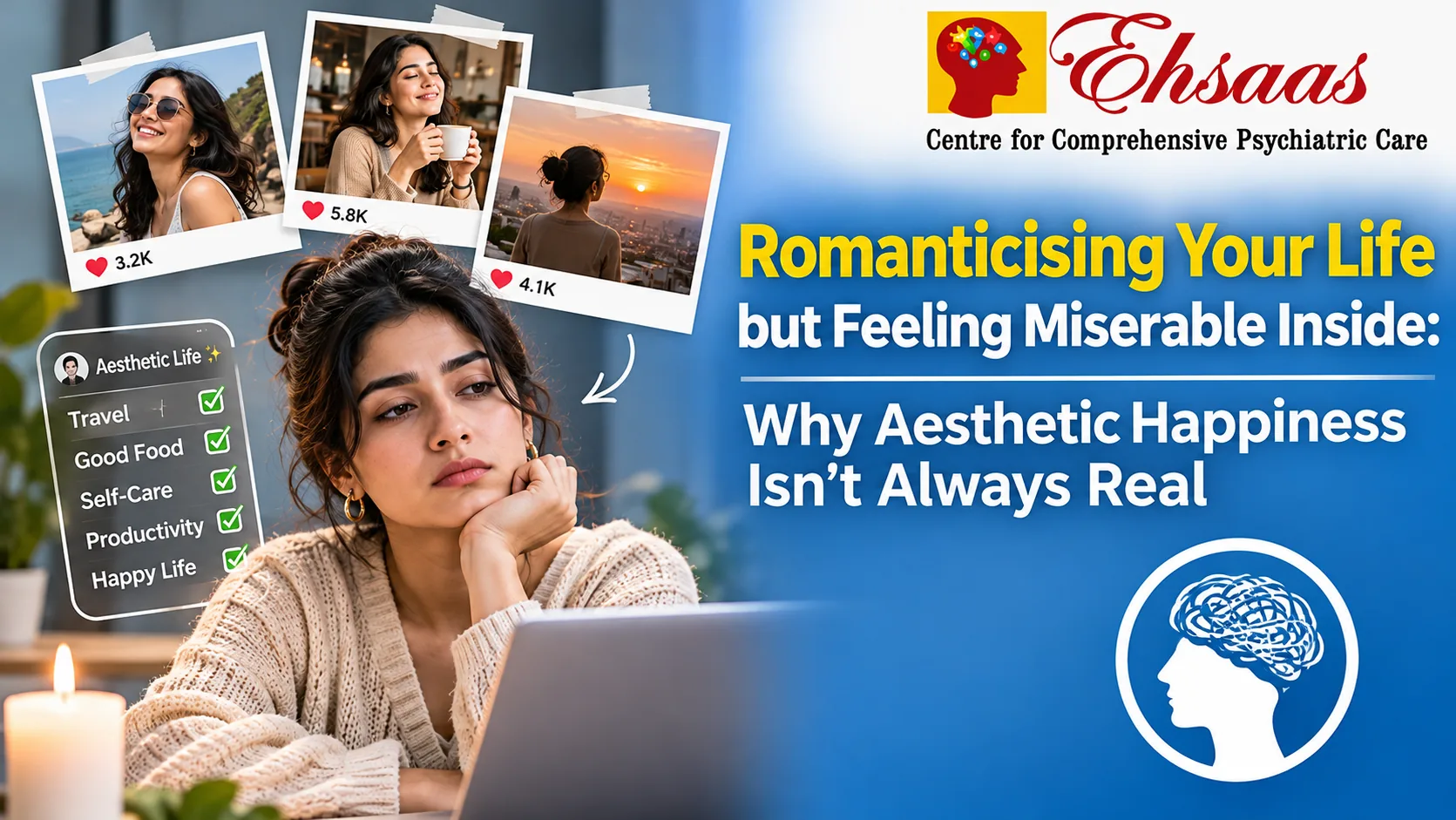
Romanticising your life is a healthy habit when it helps you notice and enjoy real moments. It becomes a problem when the aesthetic is used to hide sadness, anxiety or exhaustion you have not faced. If your life looks beautiful online but feels empty inside, the gap between the two is the signal worth paying attention to.
Candles, morning journals, cafe tables, curated playlists and "that girl" routines can make ordinary days feel richer. But a pretty routine is not the same as emotional well-being. If your good days still feel hollow, it may be time to talk to a psychiatrist in Delhi about what sits underneath.
What does romanticising your life mean?
Romanticising your life means deliberately paying attention to small, pleasant details so that everyday routines feel meaningful: making tea in your favourite cup, taking a longer route past trees, lighting a lamp in the evening, or writing in a journal. It is a mindset shift, not a change in circumstances.
The trend grew on social media, where it is often shown through soft lighting, tidy desks, journeying, solo cafe dates and carefully edited mornings. This is where the term aesthetic happiness comes from: happiness that is defined by how it looks, not only by how it feels.
The idea is not new. Many traditions encourage mindful appreciation of ordinary moments. The question is not whether you do it, but what you are using it for: to enrich a life you are living honestly, or to cover up what you are avoiding.
Is romanticising your life actually healthy?
Yes, in most cases. Paying attention to small pleasures works like mindfulness and gratitude practice, and many people find it lifts mood and adds structure to the day. It stays healthy only when it sits alongside honest emotions instead of covering sadness or anxiety.
Often, yes. Paying deliberate attention to pleasant moments is close to mindfulness and gratitude practices, which many people find helpful for mood. Healthy romanticising can:
- Help you slow down and notice small joys on busy days
- Build routines that bring structure, such as a morning walk or evening journeying
- Encourage self-care and a kinder way of talking to yourself
- Make ordinary tasks feel less like a burden
The key is that it sits alongside honest emotions. You can enjoy your evening chain and still admit, "I had a hard week and I feel low." Healthy romanticising adds colour to real life. It does not replace it.
When does aesthetic happiness become a mask? Signs to watch for
The clearest sign is a gap between how your life looks and how it feels. You may feel empty or anxious on days that look perfect, feel guilty about being sad, and hide your distress because everything seems fine from outside. The main signs are listed below.
Aesthetic happiness becomes a mask when the effort goes into looking okay instead of being okay. Signs include:
- You feel empty or flat even on days that look perfect
- You plan or photograph moments more than you actually enjoy them
- You feel pressure to be positive and guilty when you are sad, tired or angry
- You use routines, shopping, productivity or content to avoid thinking about a problem
- You cry or feel anxious when nobody is looking, but seem fine in public
- Sleep, appetite or energy have changed, and you brush it off with "I'm just busy"
- You cannot tell friends how you really feel because your life "looks so good"
- Small disruptions, such as a skipped routine, cause outsizes distress
This pattern overlaps with what is sometimes called toxic positivism, the pressure to stay upbeat and dismiss negative emotions. It also overlaps with how some people live with what is informally called "smiling depression" or high-functioning anxiety. These are everyday descriptions, not formal medical diagnoses, but the experience of struggling while appearing fine is real and worth taking seriously. Only a qualified clinician can tell whether depression or anxiety is present.
Aesthetic happiness vs real well-being: what is the difference?
Aesthetic happiness is judged by how life looks to others, while real well-being is judged by how it feels to you. The first hides sadness and depends on props and approval; the second allows difficult emotions and rests on connection, rest and meaning. The table compares both.
| Aspect | Aesthetic happiness | Real emotional well-being |
|---|---|---|
| Focus | How life looks to others | How life feels to you |
| Handling sadness | Hidden, edited or pushed away | Acknowledged and allowed |
| Source of joy | Props, routines, content, approval | Connection, meaning, rest, honest emotion |
| Social media role | Often central, with constant checking of likes | A tool, not a measure of worth |
| When something goes wrong | Panic that the image will crack | Space to feel it and ask for help |
| After a "perfect" day | Can still feel empty or tired | Usually feels settled, even if the day was plain |
| Relationships | Shared highlights only | Honest conversations, including difficult ones |
How do social media and comparison make it harder?
Social platforms reward polished moments, so what you see is a highlight reel. Gomez and colleagues (2021) found that making upward social comparisons online was associated with poorer well-being. A 2024 study in Discover Psychology found that upward comparison on Instagram reduced body-esteem, even though self-esteem did not change significantly.
There is a second layer. Research by Salopek and Eastin (2024) on "toxic positivism" suggests that constantly positive posts can feel like a hidden pressure to appear happy, and that perceiving other's posts as staged can itself drive more upward comparison and more curated self-presentation. In simple words, everyone performs happiness, and everyone feels they are falling short.
If this sounds familiar, our guide on digital burnout and screen time explains how constant online exposure affects mood and attention. These findings show associations; they do not mean social media alone causes depression or anxiety.
How can you keep your happiness real? 7 practical ways
- Let feelings in before the aesthetic. Check in first: "What am I actually feeling?" Sit with it for a minute before reaching for the candle, playlist or camera.
- Keep one private ritual. Enjoy something you never post, such as a walk or a journal page, so it stays for you and not for an audience.
- Write honestly, not prettily. Spend five minutes writing what went wrong today without editing it into a quote.
- Limit the highlight reel. Mute accounts that make you feel less than, and set daily time limits for scrolling.
- Share one real thing with one real person. A friend, sibling or partner. Honest connection is a stronger source of well-being than a polished feed.
- Allow "bad days" without fixing them. Not every low mood needs a productivity routine. Rest is a valid response.
- Notice the body. Sleep, food, movement and sunlight matter. Try basic stress management before blaming yourself. See our stress management page for ideas.
If these steps feel impossible, or the emptiness does not lift, that is useful information, not a personal failure. Please seek help immediately if you have thoughts of harming yourself.
When should you see a psychiatrist in Delhi?
See a psychiatrist in Delhi if sadness, emptiness or anxiety lasts two weeks or more, even when your life looks fine from outside, or if it affects sleep, work or relationships. An assessment can show whether depression, anxiety or burnout is involved and what support suits you. Results vary.
It is worth booking a consultation if you notice any of the following:
- Persistent sadness, emptiness or loss of interest for two weeks or more, even when life looks fine from outside
- Constant worry, restlessness or racing thoughts that you hide well
- Changes in sleep, appetite, energy or concentration
- Feeling numb, hopeless, or like you are only "performing" normal
- Increased use of alcohol, screens or other habits to escape feelings
- Difficulty working, studying or keeping relationships because of how you feel
A psychiatrist can assess whether your symptoms point to depression, anxiety, burnout or another condition and discuss suitable options, which may include therapy, lifestyle changes and, if clinically needed, medication. Treatment is individual, and results vary.
A chatbot or a video cannot replace an assessment. Read why in our article on whether artificial intelligence (AI) chatbots can replace a psychiatrist (see this guide). To book, contact us.
If you have thoughts of ending your life or harming yourself, seek help immediately: call a local emergency number, go to the nearest hospital or reach out to someone you trust right now.
This article is for general awareness and is not a substitute for professional medical advice, diagnosis or treatment.
About the doctor
Dr Manish Sarkar is a consultant psychiatrist in Delhi, practising at Ehsaas in Chittaranjan Park (MBBS; DPM, Diploma in Psychological Medicine, from NIMHANS, the National Institute of Mental Health and Neurosciences, Bangalore; FIPS, Fellow of the Indian Psychiatric Society; FADP). He is the founder of Ehsaas – Centre for Comprehensive Psychiatric Care.
Clinic: Ehsaas, J-1976, Chittaranjan Park, New Delhi – 110019
Timings: Mon–Sat 10:00 AM–1:00 PM and 5:00 PM–9:00 PM; Sunday 5:00 PM–9:00 PM
Phone: 9717755296 · 8527830987 · 011-41635296
Frequently Asked Questions
Is romanticising your life good for mental health?
It can be, when it helps you notice real moments and sits alongside honest emotions. It is less helpful when it is used to hide sadness or anxiety.
What is aesthetic happiness?
It is happiness defined mainly by how it looks, such as perfect routines and curated photos, instead of how it feels inside.
Why do I feel empty even when my life looks perfect?
Emptiness can come from stress, burnout, low mood, anxiety or unmet emotional needs. If it lasts two weeks or more, a professional assessment is advisable.
What is toxic positivism?
It is the pressure to stay positive and dismiss difficult emotions, which can leave people feeling unheard or guilty for being sad.
Is "smiling depression" a real diagnosis?
No. It is an informal phrase for people who appear fine but are struggling inside. Depression itself is a medical condition that only a clinician can diagnose.
Does social media make people unhappy?
A 2021 study by Gomez and colleagues links upward online comparison with poorer well-being, but the effect varies and social media is not the only cause.
How do I stop comparing my life to others online?
Limit scrolling time, mute accounts that trigger comparison, and remind yourself that posts are highlights, not full stories.
When should I consult a psychiatrist?
If low mood, anxiety or emptiness affects your sleep, work or relationships, or lasts two weeks or more, book a consultation at Ehsaas, Chittaranjan Park, Delhi.

Medically reviewed by
Dr. Manish Sarkar , MBBS, DPM (NIMHANS), FIPS, FADP
This page is for general information and is not a substitute for a consultation. Treatment is decided individually after assessment.
References
- Salopek A, Eastin M. Toxic positivism intentions: an image management approach to upward social comparison and false self-presentation. Journal of Computer-Mediated Communication, 2024.
- Wong SS, Wan ALH, Lew Z. Is "good vibes only" really good? Investigating perceptions of toxic positivism on social media. New Media & Society, 2025.
- Instagram social comparison, self-esteem and body-esteem study. Discover Psychology, Springer, 2024.
- Gomez et al. Online upward social comparison and well-being, 2021.